Rhino LED Lights
A Purpose-Built Workstation Instead of an Off-the-Shelf Compromise
The client had a specific set of jobs to run on one machine. Rather than buying a catalog workstation and hoping it fit, we specified every component around those jobs - and skipped the parts they would have been paying for but never using.
The Problem
The client had one machine expected to do several heavy jobs at once: training and running models, processing and rendering video, and moving large files across the network to and from a NAS. Each of those pushes a different part of a computer, and a machine that is good at one of them is often mediocre at the others.
Buying this off the shelf means paying a name-brand premium for a configuration somebody else decided on. The bits you need are usually undersized and the bits you do not need are the expensive ones. The machine also had to run Windows 11 Pro, because that is what their existing software stack requires.
What We Built
What Changed
- The client got the performance their work needs, in the places their work actually needs it.
- Money went into cores, memory, storage and networking rather than into a brand premium.
- Proven previous-generation server parts covered the heavy lifting at a fraction of new-equipment cost.
- The machine runs their existing Windows software stack, so nothing else in their workflow had to change.
- Every component is a standard part, so upgrades and repairs are not tied to one manufacturer.
What This Could Do in Your Business
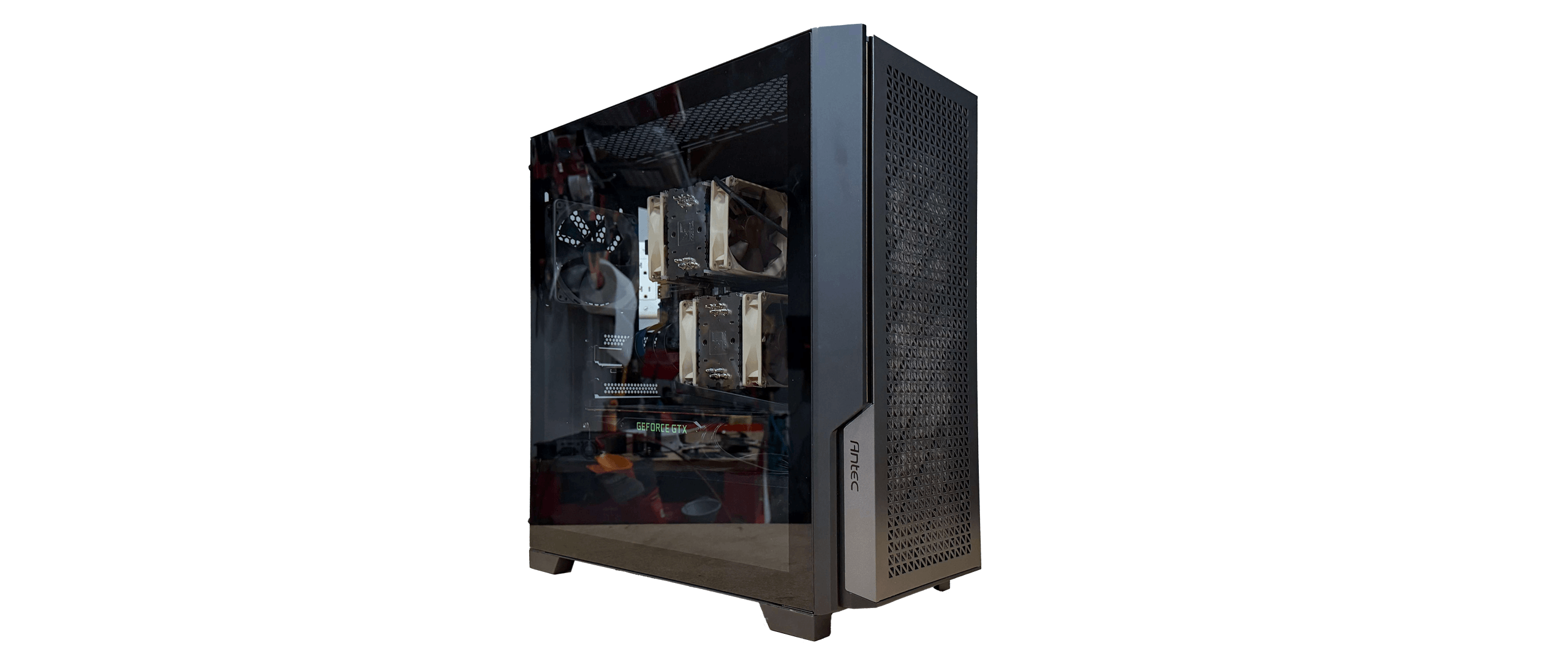
Build Gallery
Detailed views of the completed system - Click any image to view larger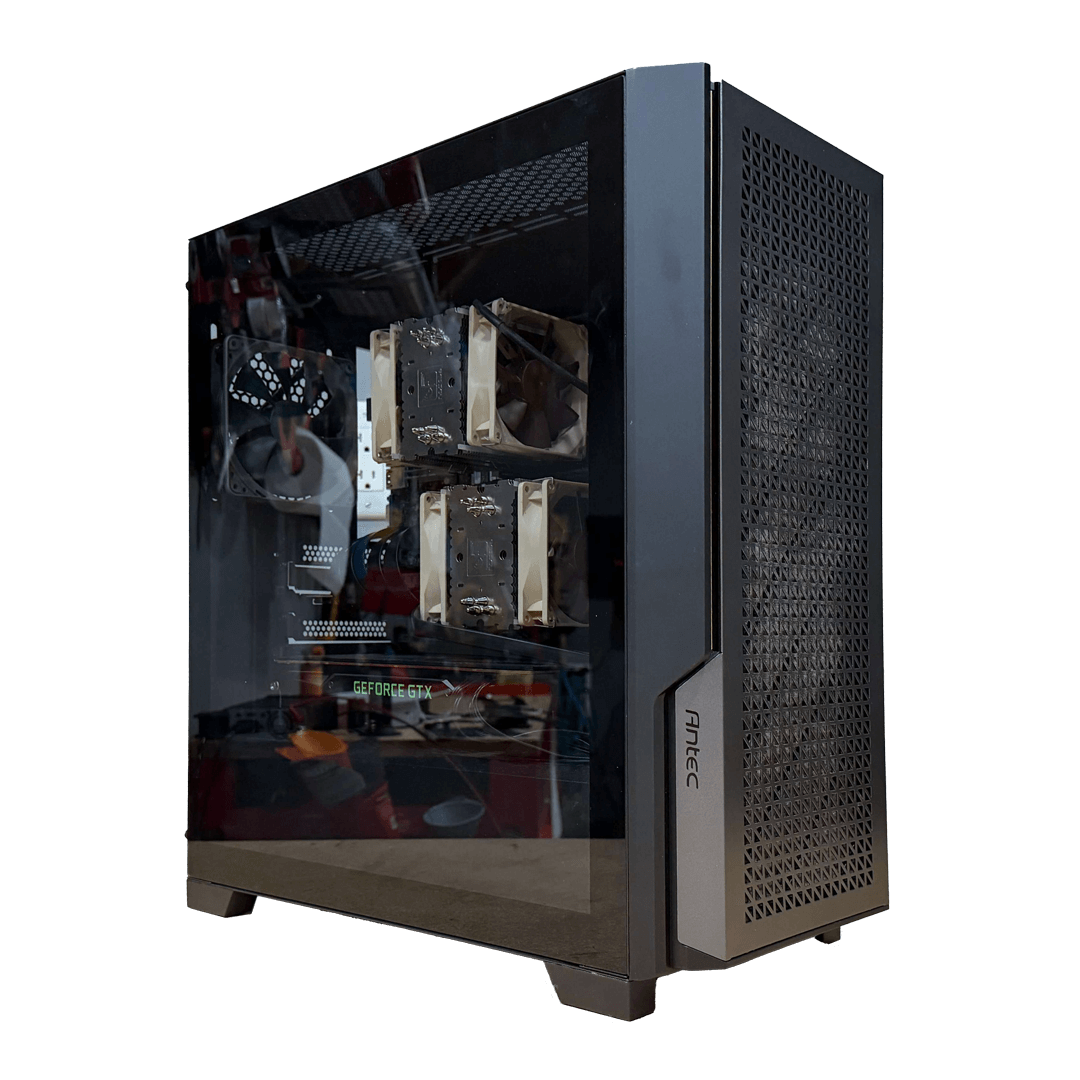
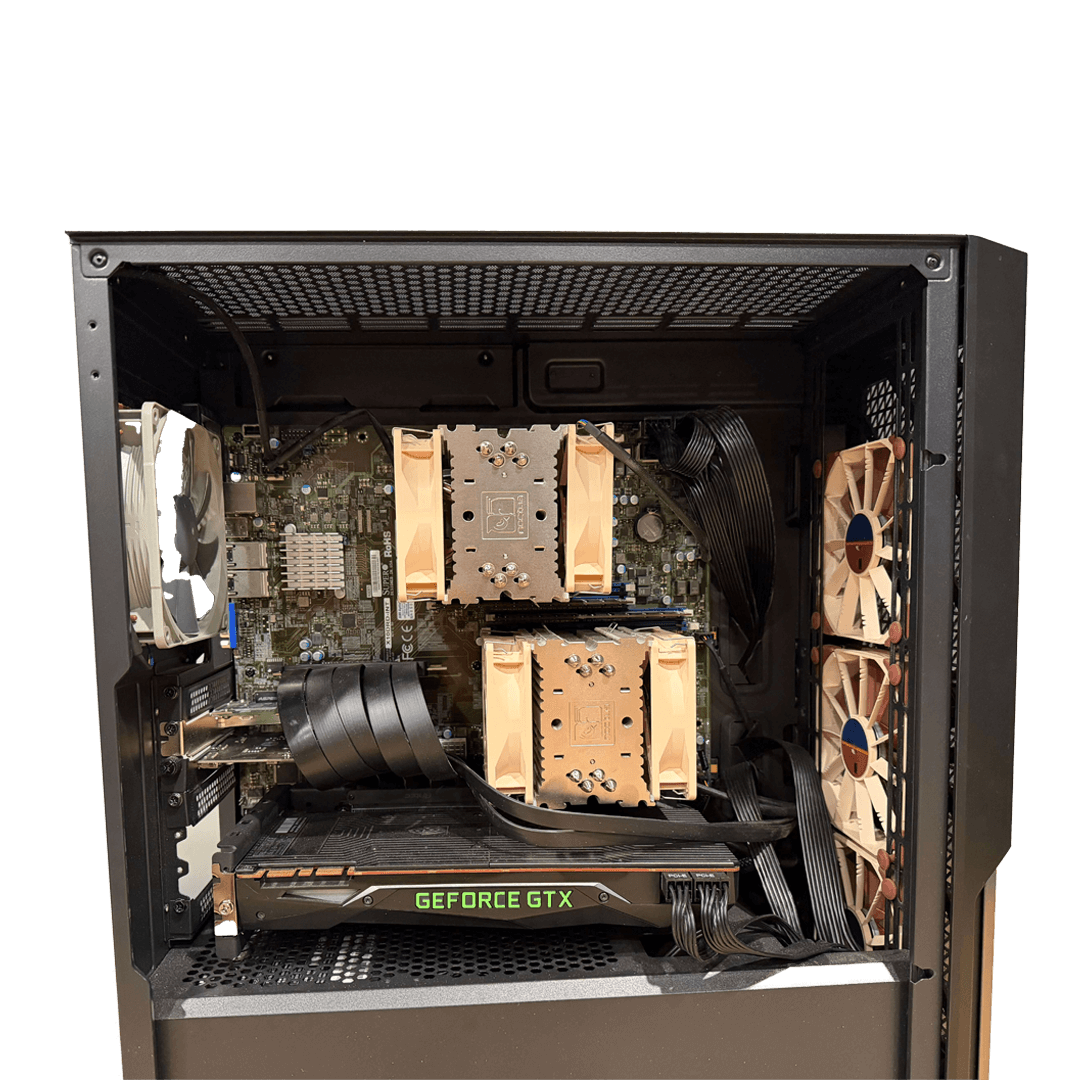
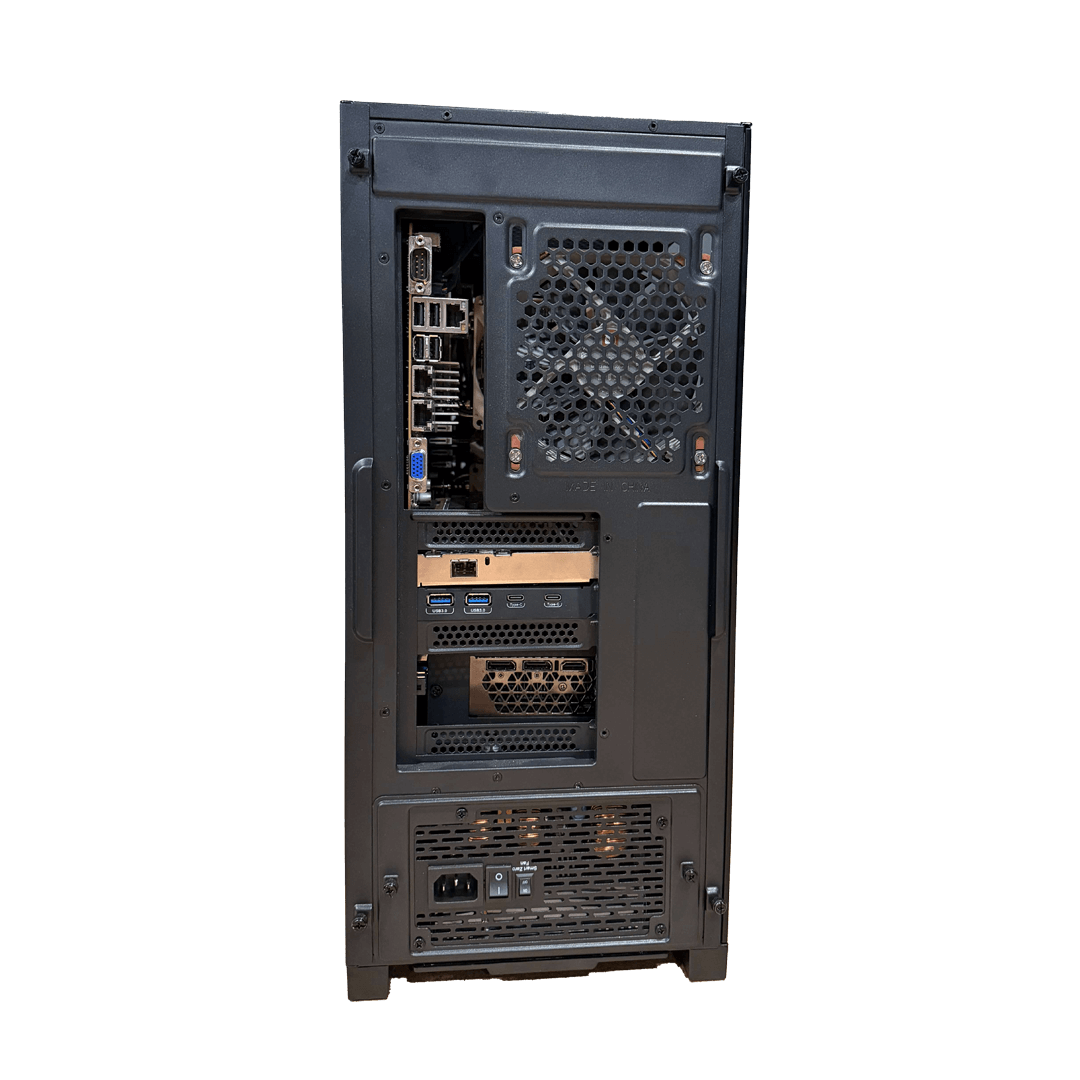
This machine came out of our custom computer build practice: we work out what the machine has to do first, then choose parts to match.
Not sure what hardware your work actually needs?
Describe the jobs the machine has to run, not the specification you think you need. Working out the second from the first is most of the value here.
Under the Hood
For the technical evaluators: every component and why it is in there.Customer Story
Why the machine was specified this wayThe Challenge
Our client needed a workstation capable of handling several demanding workloads at the same time: running and training models, video processing and rendering, and high-speed NAS operations. They needed server-grade performance and reliability without paying name-brand prices for it.
The system had to handle sustained high CPU loads, large memory requirements, fast storage for video editing, and 10Gbit networking for NAS integration - all while running Windows 11 Pro for compatibility with their existing software stack.
The Solution
We designed a dual-CPU system that maximizes performance per dollar using carefully selected server components. Proven server-grade hardware from previous generations delivered the capability at a fraction of the cost of new equipment.
The build features dual Intel Xeon processors providing 12 cores and 24 threads, 128GB of ECC server memory for error-free processing of long-running jobs, dual 2TB NVMe SSDs for fast storage, and 10Gbit networking built into the motherboard. Combined with a workstation GPU for acceleration, the machine covers all three workloads on one box.
Why This Build Stands Out
Every part in this machine is there because a specific workload needed it. Selecting the right combination of server components produced a system that handles model work, video production and high-speed networking on the same box. The dual-CPU architecture keeps multitasking smooth under sustained load, and ECC memory means a stray memory error cannot silently corrupt a long-running job. Nothing in the budget went towards capability the client would not use.
Complete System Specifications
Every component and why it was chosen- Model: 2x Intel Xeon E5-1650 v4
- Total Cores: 12 Cores / 24 Threads
- Base Clock: 3.60 GHz
- Cache: 15MB L3 per CPU
- Socket: LGA2011-3
- Architecture: Broadwell-EP
- Model: Supermicro X10DRD-iNT
- Form Factor: E-ATX
- Dual CPU: Intel LGA2011-3
- Networking: 2x 10Gbit Ethernet
- NVMe Support: 2x NVMe PCIe
- Enterprise: Server-Grade Reliability
- Total: 128GB DDR4
- Configuration: 4x 32GB Modules
- Speed: PC4-2400T (2400MHz)
- Type: RDIMM ECC Server Memory
- Model: Samsung M393A4K40BB1-CRC0Q
- Error Correction: ECC Enabled
- Primary: 2x Intel DC P3600 Series
- Capacity: 2TB each (4TB total)
- Interface: NVMe PCIe 2.5" SSD
- Model: SSDPE2ME020T4
- Performance: Enterprise-Grade Speed
- Reliability: Data Center Series
- Model: NVIDIA GeForce GTX Titan Xp
- VRAM: 12GB GDDR5X
- Architecture: Pascal
- Part Number: 900-1G611-2530-000
- Purpose: Compute Acceleration & Rendering
- Performance: High-End Workstation GPU
- CPU Coolers: 2x Noctua NH-U9DX i4
- Cooler Type: Premium Air Cooler for Intel Xeon
- Case Fans: 5x Noctua Premium Fans
- Fan Details: 1x NF-P12 redux-1700, 1x NF-A12x25, 3x NF-F12
- Fan Control: All 4-Pin PWM for optimal cooling
- PSU: Thermaltake Toughpower GF A3 750W
- Efficiency: 80+ Gold Certified
- Standard: ATX 3.0 / PCI-E 5.0
- Warranty: 10 Year Warranty
- Model: Corsair 3000D RGB Airflow
- Form Factor: Mid-Tower
- Fans: 3x AR120 RGB Fans Included
- GPU Support: Three-Slot GPU
- Fan Capacity: Up to 8x 120mm Fans
- Design: High-Airflow Optimized
- Onboard: 2x 10Gbit Ethernet
- Speed: 10 Gigabit per Port
- Purpose: High-Speed NAS Usage
- Performance: Enterprise Networking
- Dual Port: Redundancy & Load Balancing
- OS: Windows 11 Pro
- Optimization: Custom-Tuned Configuration
- Compatibility: Full Software Support
- Performance: Optimized for Workloads
Build Highlights
The decisions that shaped this machineValue Engineering
Smart component selection beats buying the newest thing on the shelf. Choosing proven server-grade components from previous generations delivered dual-CPU performance, 128GB of ECC memory and 10Gbit networking for a fraction of what the equivalent new equipment would have cost.
Result: Server-grade capability without paying for a brand badge.
Dual-CPU Architecture
Two Intel Xeon E5-1650 v4 processors provide 12 cores and 24 threads. That headroom is what lets model work, video rendering and high-speed NAS transfers run at the same time without any one of them stalling the others - which is exactly what the client needed.
Result: Several heavy jobs on one machine instead of queueing them.
ECC Memory for Long Jobs
128GB of Samsung ECC server memory is not just about capacity - it is about error correction. On a job that runs for hours, a single flipped bit in ordinary memory can corrupt the result without anything reporting an error. ECC catches and corrects that.
Result: Long-running work you can trust the output of.
10Gbit Networking Built-In
The Supermicro motherboard includes dual 10Gbit Ethernet ports out of the box - no add-in cards needed. That means fast NAS access for video editing workflows and quick large-file transfers, using a port that was already paid for.
Result: Network speed matched to the file sizes they actually work with.
What Goes Into a Build
Specification, assembly and validationHardware
System Integration
Project Summary
Final deliverables and outcomesThis dual-CPU workstation was specified from the workloads backwards. It handles model training, video processing, rendering and high-speed NAS operations on one machine, and it runs Windows 11 Pro so the client's existing software stack works unchanged.
What the Client Got
- Dual-CPU Architecture: 12 cores, 24 threads for running jobs side by side
- 128GB ECC Memory: Error-correcting RAM for long-running work
- 4TB NVMe Storage: Dual enterprise SSDs sized for large video files
- 10Gbit Networking: Built-in dual-port for high-speed NAS access
- GTX Titan Xp 12GB: Workstation GPU for compute acceleration
- Windows 11 Pro: Runs their existing software stack unchanged
- Professional Assembly: Clean build with premium cooling
- Standard Components: Serviceable and upgradeable, not vendor-locked
The point: the machine was matched to the work rather than to a product tier, so the budget went into the capability the client uses every day and not into the parts they never would have touched.
The Capability Behind This Project
If any of that sounded like your business, this is the service it falls under.
Need a machine that fits the work, not a product tier?
Tell us what the machine has to do all day - the software, the file sizes, the jobs that currently make people wait. We'll spec it around that.